(BPT) - When school is out on break, many families look for ways to keep their children engaged while still encouraging learning. STEM — science, technology, engineering and math — activities can turn everyday moments into opportunities for discovery, helping build skills while having fun.
Research from the U.S. Department of Education suggests early exposure to STEM supports learning across subjects and helps children build important cognitive skills. Data also shows strong connections between early learning experiences and later academic and developmental outcomes. For example, a study published in the Journal of Experimental Child Psychology found that children's early experiences with play and learning activities can support the development of self-regulation and early reading and math abilities.
Programs like those offered at Kiddie Academy® Educational Child Care encourage young learners to explore STEM concepts through hands-on play and guided exploration.
"Children are naturally curious about the world around them," said Joy Turner, vice president of education at Kiddie Academy. "When parents encourage their little ones to observe, experiment and ask questions, they're helping build critical-thinking skills that support learning for years to come."
The good news for families: STEM learning doesn't require expensive supplies or complicated lessons. Many engaging activities can happen right at home, or anywhere your family travels during break.
Explore nature up close
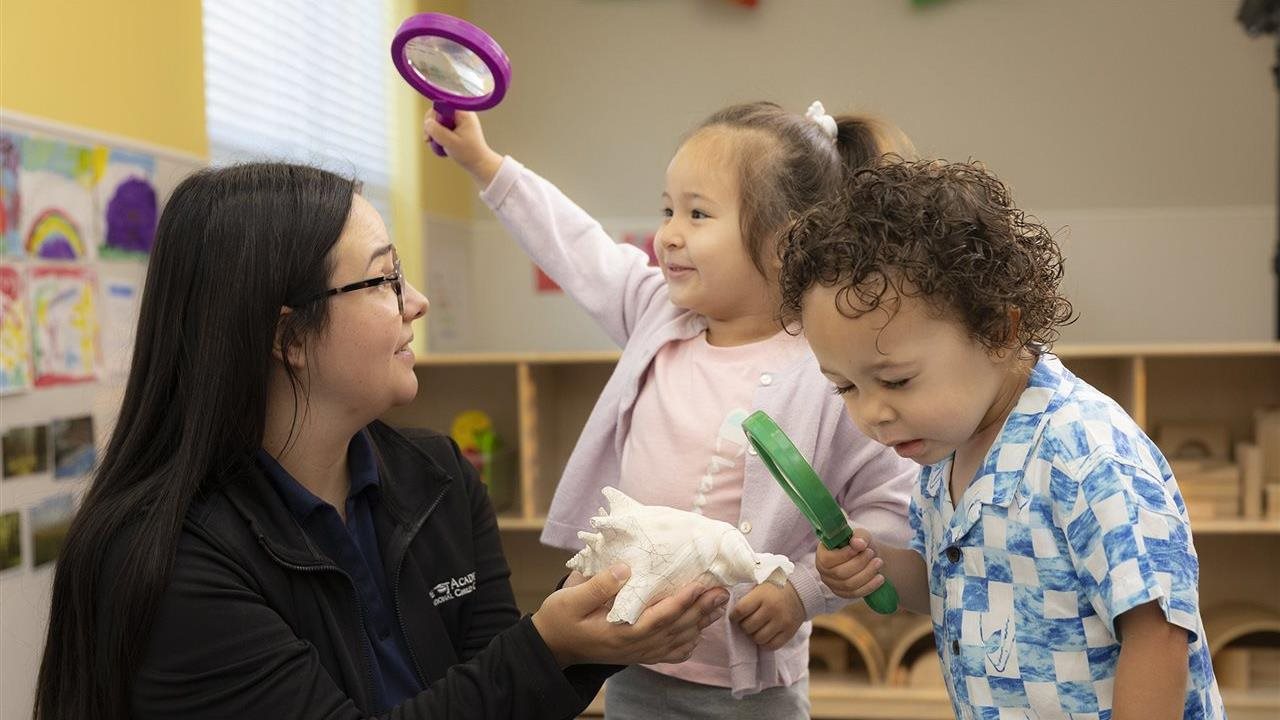
A walk along the beach, park trail or even your own backyard can become a mini science expedition. Pack a magnifying glass and encourage your children to examine shells, rocks, leaves or insects. As they explore, ask questions like:
- How are these objects different?
- What colors do you see?
- What textures do you notice?
- Why are some objects smoother than others?
These simple comparisons encourage curiosity and observation while helping your kids practice early scientific thinking. Outdoor exploration can also support physical development through movement and play.
Make slime and explore chemistry
Slime-making is a favorite activity for many children that also introduces basic chemistry concepts. Encourage your child to test variations by adding colors or textures to the mixture. Before they mix, ask what they think will happen. Making predictions helps build reasoning skills and introduces the idea that experiments can have different outcomes.
Slime or other basic chemistry recipes often involve common household ingredients, which means adult supervision is recommended at all times. Always read labels, avoid mixing products not intended to be combined and keep ingredients out of reach of young children. Adults should ensure the activity and the materials used are age appropriate and should be used at their own discretion.
Design an egg-drop challenge
Turn engineering into a fun family challenge by asking your little one to design a way to protect an egg from breaking when dropped.
Using materials like cardboard, tape, paper or cotton balls, children experiment with cushioning, structure and problem-solving. After testing their designs, talk about what worked and what they might change for next time. Activities like this help your kids learn that trying again and improving their ideas is part of the process.
Why hands-on STEM matters
Research shows that active, hands-on learning is one of the most effective ways for young learners to engage with STEM concepts. These experiences help develop problem-solving, persistence and creativity — skills that will support your little one across any discipline.
"STEM at any age is about exploration," added Turner. "When children are encouraged to investigate how things work, they begin building the confidence to ask questions and tackle new ideas."
Whether you're traveling on vacation or spending time close to home, everyday moments can become meaningful learning opportunities. By encouraging young innovators to explore, build and experiment, parents can help nurture the curiosity that fuels lifelong learning.