Press Advisory: Food Safety Advocate available to speak about recent E. coli Outbreak linked to Kebab Shop Restaurant
PR Newswire
BAINBRIDGE ISLAND, Wash., May 26, 2026
Nine people sickened including six children - Hospitalization of five with two developing serious kidney complications
BAINBRIDGE ISLAND, Wash., May 26, 2026 /PRNewswire/ --
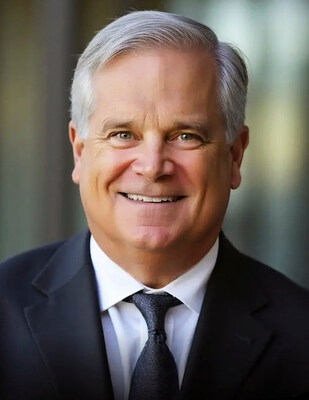
The Beginning: Jack in the Box, 1993
In January 1993, children started showing up at Western Washington emergency rooms desperately ill — the culprit was undercooked hamburgers from Jack in the Box restaurants. More than 700 people, most under the age of 10, were sickened across five states. Many never fully recovered, and four children died.
Bill Marler, then less than five years out of law school, had never heard of E. coli O157:H7 before the outbreak. He spent hours in the University of Washington medical school library before filing one of the first lawsuits. He ultimately represented Brianne Kiner, the most seriously injured survivor — a nine-year-old who spent 40 days in a coma, and whose doctors didn't expect her to survive. Marler negotiated a $15.6 million settlement, setting a state record. He and his colleagues won $50 million in damages for nearly 200 victims in total.
E. coli O157:H7 as an Adulterant
The Jack in the Box outbreak was a watershed moment not just legally but regulatorily. The declaration of E. coli O157:H7 as an adulterant in ground beef was met with strong opposition from the meat industry, which filed suit claiming the USDA had acted arbitrarily. However, the United States District Court upheld the USDA's authority, finding it had the power to declare substances adulterants to spur the industry to implement preventative measures. That designation meant that any ground beef testing positive for O157:H7 was legally considered adulterated and could not be sold — a powerful enforcement tool.
The Non-O157 Petition
Marler didn't stop there. Concerned that non-O157 Shiga toxin-producing E. coli strains were sickening Americans but receiving almost no regulatory attention, Marler personally funded a major scientific study costing approximately $500,000, in partnership with microbiologist Dr. Mansour Samadpour of the Seattle-based Institute for Environmental Health. They tested 5,000 large retail packages of ground beef across the country for all strains of E. coli.
The results showed approximately 2% contamination — meaning that given the billions of pounds of ground beef consumed annually, millions of pounds of potentially dangerous meat were reaching consumers every year, and regulators weren't even required to look for it.
In 2009, Marler Clark petitioned FSIS to extend the adulterant designation to non-O157 Shiga toxin-producing E. coli strains, filing on behalf of three seriously injured victims and documenting the science. FSIS resisted for years. When the agency failed to respond as required by law, Marler threatened to sue — at which point USDA formally acknowledged receipt.
In 2012, FSIS finally acted: six additional non-O157 strains — O26, O45, O103, O111, O121, and O145 — were declared adulterants. The same industry warnings about economic catastrophe followed. And the same thing happened: the system adapted, illnesses declined, and the sky did not fall.
"Put Me Out of Business"
One of Marler's most memorable contributions to the food safety conversation was a challenge he issued to the beef industry and USDA in an op-ed for the Denver Post. Just over 20 years after writing that op-ed challenging the USDA/FSIS and the beef industry to "put him out of business," E. coli cases linked to ground beef had nearly, but not completely, disappeared. As Marler put it: "I could count on a significant E. coli outbreak and recall occurring like clockwork nearly every Spring or Summer. When 2003 came, there were no outbreaks. E. coli cases linked to ground beef are no longer a part of the work we do anymore. The industry to its credit did its job and met my challenge."
From the Jack in the Box outbreak of 1993 until the 2002 ConAgra E. coli outbreak, at least 95% of Marler Clark's revenue was from E. coli cases linked to hamburger. Today, it is nearly zero.
Even as the broader trend improved, individual tragedies persisted. Stephanie Smith was a 22-year-old dance instructor from Cold Spring, Minnesota, who developed hemolytic uremic syndrome (HUS) after eating a Cargill-produced hamburger contaminated with E. coli O157:H7. She was left paralyzed from the waist down. Stephanie's story became the subject of a Pulitzer Prize–winning investigation by New York Times reporter Michael Moss, who traced her burger through the entire supply chain and exposed the industry's practice of blending trim from multiple processors with minimal testing. Marler represented Smith in her lawsuit against Cargill.
The Netflix Documentary
Marler is a featured figure in the Netflix documentary Poisoned: The Dirty Truth About Your Food, which chronicles his decades-long career as a leading food safety advocate and lawyer. The film is based on Jeff Benedict's book Poisoned, which details Marler's involvement in the landmark 1993 Jack in the Box E. coli outbreak, including the $15.6 million settlement for Brianne Kiner
Fewer E. coli Cases Linked to Hamburger
The regulatory and industry reforms that Marler fought for have clearly had an impact. Since the 2018 E. coli outbreak linked to Romaine lettuce from Yuma, E. coli, Salmonella, Listeria, and hepatitis A outbreaks linked to fresh fruits and vegetables now take up the bulk of Marler's attention — a remarkable shift from the days when ground beef dominated his caseload.
The Kebab Shop Outbreak, 2026
That said, ground beef has not been entirely tamed. Just this month, as of May 19, 2026, nine California residents have been infected with the outbreak strain of STEC O157:H7, with illness onset dates ranging from March 27 through April 30, 2026. Six of the illnesses are in children. Five individuals have been hospitalized, and two have developed HUS. The beef kofta — seasoned ground beef kebabs — was produced by Olympia Food Industries in Franklin Park, Illinois, and supplied to The Kebab Shop restaurant chain locations in California, Texas, and Florida. Leftover ground beef tested positive for E. coli. The Kebab Shop stopped selling beef kofta at all locations on May 18, 2026.
Bill Marler
William "Bill" Marler has been a food safety lawyer and advocate since the 1993 Jack-in-the-Box E. coli Outbreak which was chronicled in the book, "Poisoned" and in the recent Emmy Award winning Netflix documentary by the same name. Bill work has been profiled in the New Yorker, "A Bug in the System;" the Seattle Times, "30 years after the deadly E. coli outbreak, A Seattle attorney still fights for food safety;" the Washington Post, "He helped make burgers safer, Now he is fighting food poisoning again;" and several others.
Dozens of times a year Bill speaks to industry and government throughout the United States, Canada, Europe, Africa, China and Australia on why it is important to prevent foodborne illnesses. He is also a frequent commentator on food litigation and food safety on Marler Blog. Bill is also the publisher of Food Safety News.
 View original content to download multimedia:https://www.prnewswire.com/news-releases/press-advisory-food-safety-advocate-available-to-speak-about-recent-e-coli-outbreak-linked-to-kebab-shop-restaurant-302782480.html
SOURCE Marler Clark, The Food Safety Law Firm