
Common Transmission Misdiagnosis Issues: Insights from Auto Mechanics in Albuquerque
Albuquerque, United States - January 22, 2026 / Mango Automotive /
Albuquerque, NM - Transmission warning lights are among the most alarming alerts a driver can face, but many of these warnings stem from unrelated issues that have nothing to do with the transmission itself. Symptoms like rough shifting or loss of power can also originate in other systems.
Mango Automotive, a trusted provider of transmission repair at The Heights in Albuquerque, has seen vehicles brought in after receiving incorrect transmission repair recommendations elsewhere. In most cases, the real issue wasn’t related to the transmission at all, but misdiagnosed due to rushed or incomplete diagnostics. Rather than replace the transmission outright, Mango Automotive’s experienced auto mechanics in Albuquerque identify whether the problem lies in sensors, engine performance, electrical faults, or the transmission system itself.

Transmission Warnings Can Be Misleading
Modern vehicles use interconnected control systems. A single malfunction in a sensor or engine component can affect the powertrain and trigger multiple warning lights. Drivers may experience symptoms, such as gear hesitation, limp mode, or reduced acceleration, which are often blamed on transmission failure.
In many cases, the problem lies elsewhere. Engine misfires, for example, can disrupt transmission behavior. Faulty mass airflow sensors and failing catalytic converters also reduce power and cause shifting issues. Mango Automotive's technicians emphasize the importance of full-system analysis before performing costly repairs.
Common Causes of False Transmission Alerts
Certain components frequently mimic transmission failure:
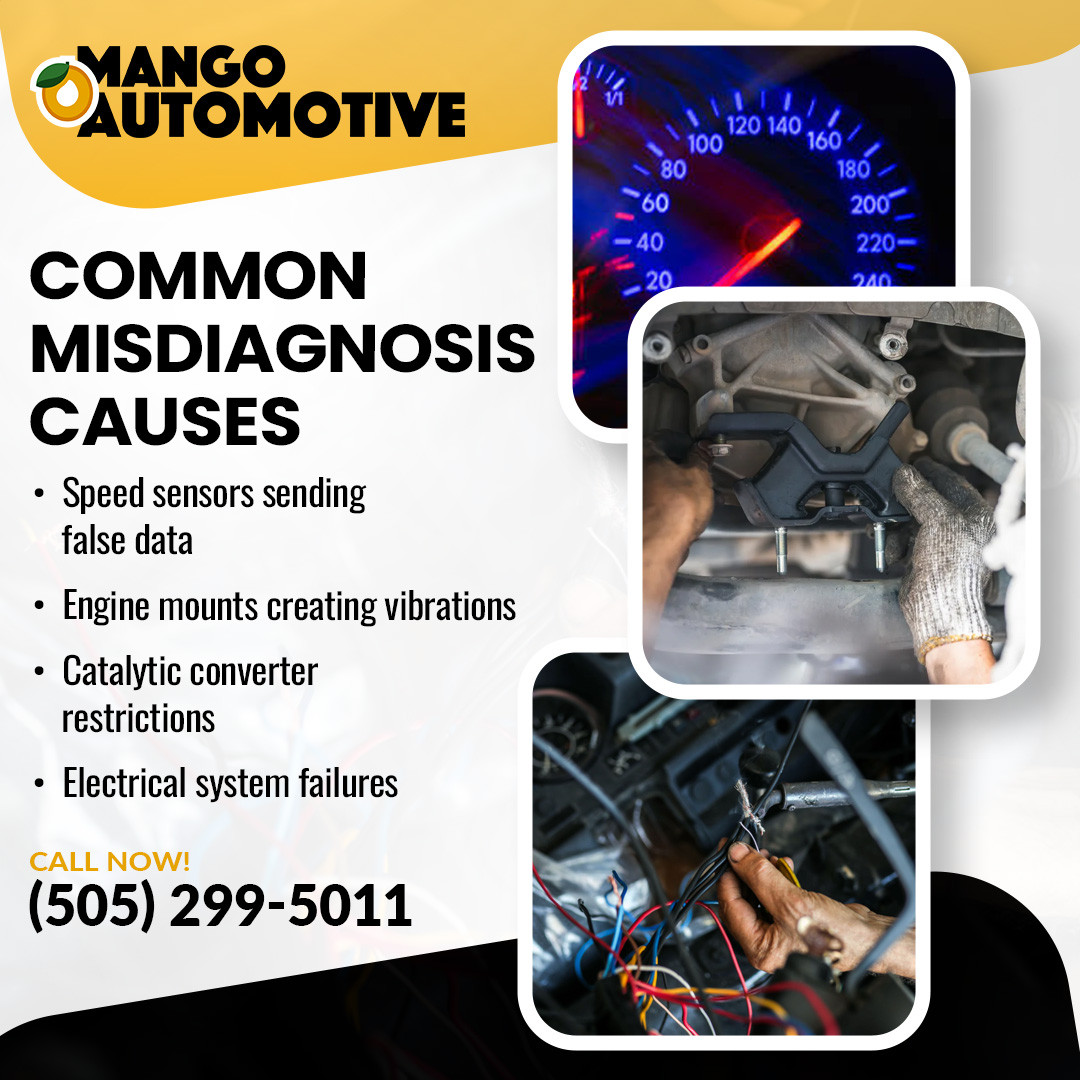
Speed Sensors
Speed sensors monitor the rotational speed of transmission components and send that data to the vehicle’s computer. When they fail, they send inaccurate data to the transmission control module (TCM), leading to gear hesitation, jerky shifts, or limp mode. Replacing the sensor, not the transmission, resolves the issue.
Transmission Range Sensors
These sensors tell the system which gear the driver has selected. A failing sensor can prevent the vehicle from starting or cause incorrect gear display, which leads to incorrect repair assumptions.
Engine Mounts
Worn mounts allow the engine to shift during acceleration or braking, creating clunking noises and vibrations. These mechanical effects are often mistaken for transmission failure.
Catalytic Converter Restrictions
Restricted exhaust flow reduces power, mimicking transmission slip. Drivers feel lagging acceleration and gear hesitation. The underlying issue lies in the exhaust system, not the transmission.
Fuel Delivery Issues
Clogged fuel filters or weak pumps reduce engine performance. The transmission cannot compensate for lost engine output, which makes gear changes feel delayed or rough.
Electrical Failures
Low battery voltage, corroded connectors, or failed transmission control modules all affect shifting. Without proper testing, these conditions often result in an inaccurate diagnosis.
The Risk of Unnecessary Repairs
Transmission repairs are among the most expensive services in automotive repair. When misdiagnosed, drivers may spend thousands on rebuilds or replacements that don’t resolve the problem. The team at Mango Automotive stresses that accurate diagnostics can save both time and money by pinpointing the true cause of symptoms.
General auto repair shops may lack the tools and training needed to diagnose modern transmission systems accurately. Misinterpretation of fault codes or sensor data can lead to wrong conclusions. That’s why Mango Automotive invests in manufacturer-level diagnostic tools and ongoing technician training.
Mango Automotive’s Diagnostic Approach
Every diagnostic at Mango Automotive begins with a detailed review of symptoms, vehicle history, and recent maintenance. From there, technicians perform:
OBD-II Scanning: Retrieving fault codes from the vehicle’s control modules.
Live Data Analysis: Monitoring real-time sensor feedback, temperatures, and solenoid activity.
Physical Inspections: Checking transmission fluid, connectors, engine mounts, and electrical systems.
Bidirectional Testing: Commanding components to operate via scan tools to test mechanical vs. electrical function.
This layered approach enables their team to confirm whether a transmission is actually failing or if the symptoms point to a different system entirely.
Local Expertise for Reliable Repair Decisions
Mango Automotive’s reputation for reliable transmission repair at The Heights in Albuquerque comes from its commitment to diagnostic accuracy. With advanced tools and trained mechanics, they identify root causes rather than rely on assumptions. This prevents unnecessary repairs and provides drivers with clear, trustworthy service recommendations.
For those searching for experienced auto mechanics in Albuquerque, Mango Automotive offers a smarter, data-driven approach to vehicle problems. Their transparent diagnostics protect Albuquerque drivers from paying for the wrong fix.
Schedule a Professional Diagnostic Today

A warning light doesn’t always mean your transmission is failing. Let an experienced auto mechanic near you take a look. Mango Automotive delivers accurate diagnostics to keep you from spending more than you need to. Contact them at (505) 299-5011 to schedule professional diagnostics in Albuquerque.


Contact Information:
Mango Automotive
10340 Comanche Rd NE
Albuquerque, NM 87111
United States
Jesse Jackson
(505) 299-5011
https://www.mangoautomotive.com/the-heights


Original Source: https://www.mangoautomotive.com/common-transmission-misdiagnosis-issues-insights-from-auto-mechanics-in-albuquerque