
Ed's Collision 1 is sharing November consumer guidance to help Minnesota drivers organize collision repair documentation before the end of the year. Located at 10758 County Rd 81 in Maple Grove, Minnesota, the facility is highlighting five categories of records that can help vehicle owners review completed repairs, address insurance inquiries, understand warranty coverage, and maintain an accurate vehicle history.
The guidance focuses on initial repair estimates, supplemental estimates, final invoices, inspection and calibration documentation, and written warranty information. These records serve different purposes, and keeping them together can provide a clearer account of damage identified and repairs completed after an accident.
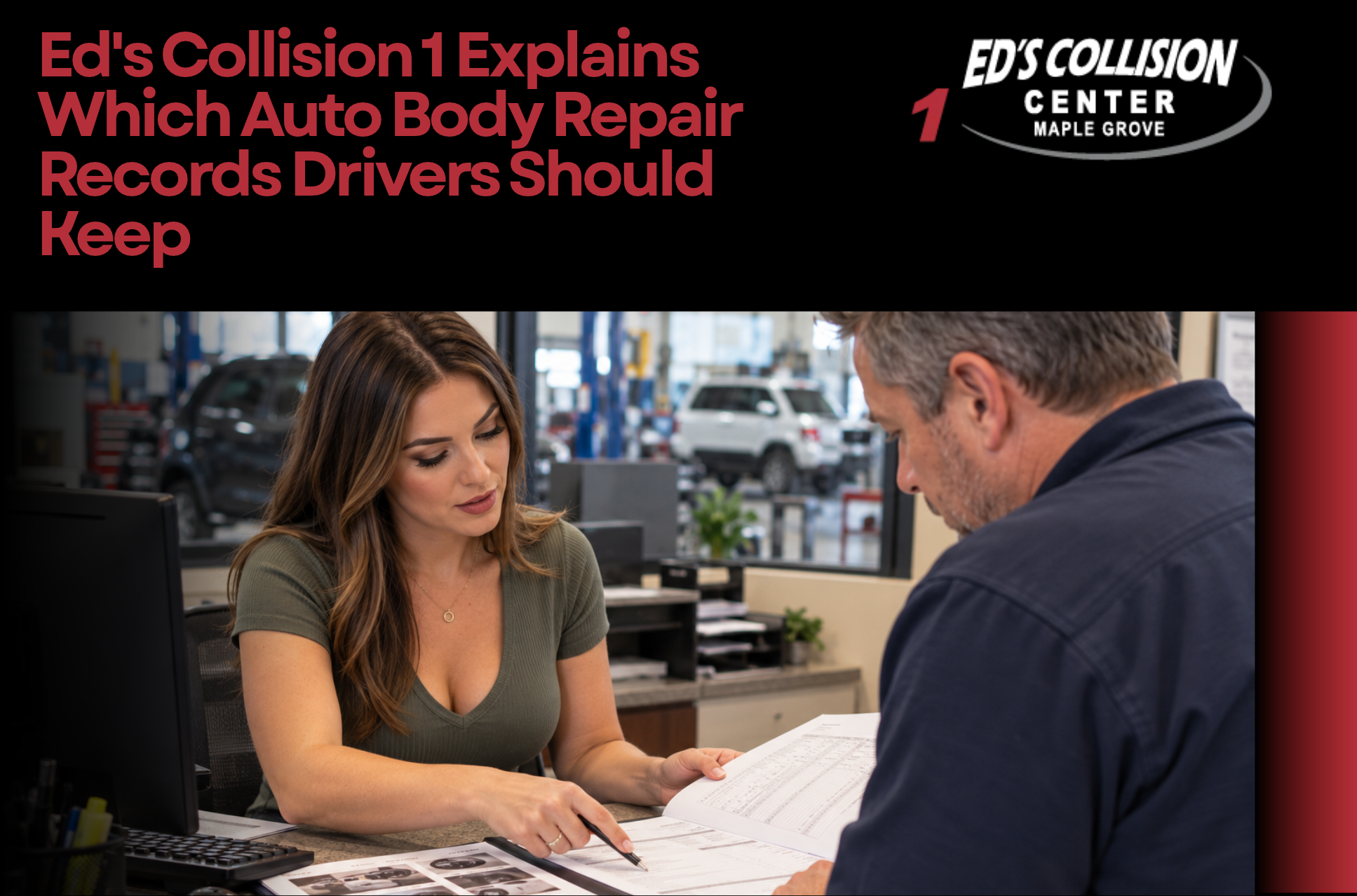
As November marks the beginning of the final two months of the year, drivers who completed collision repairs earlier in 2026 may find it useful to review their paperwork. Repair documents can become relevant months or years after the original accident, particularly when a vehicle is sold, involved in another collision, or evaluated for a concern involving previously repaired components.
Initial repair estimates are the first category of records to retain. These documents generally identify visible damage, anticipated labor operations, replacement parts, refinishing requirements, and projected repair costs based on the preliminary assessment.
An initial estimate may not represent the final repair scope because some damage remains concealed until exterior components are removed. Retaining the original estimate provides a reference for understanding how the repair plan developed.
Supplemental estimates document additional findings identified during the repair process. For example, an initial assessment may identify a damaged bumper cover, while disassembly reveals affected mounting brackets or reinforcement components. The supplemental estimate records these additional repairs and any associated changes to the original plan.
These documents may also support insurance claim reviews when additional work requires authorization. Documentation requirements vary according to the insurer, policy, and circumstances of the claim.
Ed's Collision 1 provides collision repair services for vehicles affected by accident-related damage. Repair estimates and supplemental records can help owners understand which operations were identified during assessment and which additional conditions required attention.
Final repair invoices form the third category. Unlike preliminary estimates, final invoices generally reflect the work completed and charges associated with the repair.
Keeping the invoice with earlier estimates allows vehicle owners to identify differences between the proposed and completed repairs. This information may be useful when reviewing a previous repair, providing vehicle history documentation, or addressing a concern involving a repaired area.
Ed's Collision 1 also provides auto body repair services involving exterior panels, refinishing, and related restoration work. Completed invoices can help identify the body components and repair operations addressed following a collision.
Inspection and calibration documentation represents the fourth category, particularly for vehicles equipped with electronic driver-assistance systems.
Depending on the vehicle and collision damage, repair documentation may include diagnostic scan reports, structural measurements, functional inspections, or calibration records. These records can identify procedures completed during the repair process and, where applicable, the results documented.
Modern vehicles may contain cameras, radar sensors, and other electronic components that require inspection or calibration after certain repairs. The necessary procedures depend on the vehicle's equipment, affected systems, and applicable manufacturer requirements.
Industry training organization I-CAR provides educational information about collision repair procedures and modern vehicle technologies. Its resources offer additional context for understanding the role of vehicle-specific repair information in determining necessary inspections and calibrations.
Not every collision repair requires electronic calibration or structural measurement. Similarly, a diagnostic scan report alone does not establish that every affected component has been evaluated. The relevant records depend on the actual damage and work performed.
Warranty information is the fifth category. Written warranty documents may identify covered repairs, coverage periods, exclusions, and procedures for reporting concerns after vehicle delivery.
Keeping warranty paperwork with the final invoice helps establish the original repair date and the work associated with a reported condition. Coverage depends on the applicable agreement, and different repair operations or replacement components may have separate warranty provisions.
For drivers preparing to sell or trade in a vehicle, organized repair records can provide information about previous accident damage and completed work. These documents may also be useful during future insurance reviews or when a repair facility evaluates damage from another collision.
Digital copies can help preserve paperwork that might otherwise become lost or damaged. Vehicle owners may organize files by vehicle identification number, repair date, or accident, while retaining original documents when required by an insurer or warranty provider.
The amount of documentation varies according to the repair. Minor cosmetic work may involve only an estimate, invoice, and warranty information, while more extensive collision repairs may generate supplemental estimates, structural measurement records, or electronic system calibration documentation.
For Maple Grove drivers, reviewing these records in November provides an opportunity to confirm that important repair information remains accessible before the calendar year ends. This can reduce the need to reconstruct a repair history when documentation is requested later.
Additional information about Ed's Collision 1 and its available services is provided through the Maple Grove location page. The facility serves drivers in Maple Grove and surrounding Twin Cities communities with collision-related vehicle repair needs.
Ed's Collision 1's November consumer guidance emphasizes that maintaining complete repair documentation helps vehicle owners understand the history of accident-related work. Estimates, supplemental records, invoices, inspection documentation, and warranty information provide a reference for future repair concerns, insurance inquiries, and vehicle ownership decisions.
About Ed's Collision 1
Ed's Collision 1 is an auto body and collision repair facility located at 10758 County Rd 81, Maple Grove, MN 55369. The facility provides auto body repair, collision repair, paint refinishing, and related vehicle restoration services for drivers in Maple Grove and surrounding Twin Cities communities. As part of the Collision Center 1 network, the location addresses accident-related damage through vehicle-specific assessments and applicable manufacturer repair procedures.
###
For more information about Ed’s Collision 1, contact the company here:
Ed’s Collision 1
Jerald Stiele
(763) 425-0077
EdsCollisionCC@gmail.com
10758 County Rd 81, Maple Grove, MN 55369