
Ed's Collision 1 is sharing November consumer guidance explaining why front-end collision damage may extend beyond a vehicle's grille, bumper cover, and other visible exterior components. Located at 10758 County Rd 81 in Maple Grove, Minnesota, the auto body repair facility is highlighting three areas that can require additional evaluation following a frontal impact: concealed structural components, mechanical equipment, and electronic driver-assistance systems.
The guidance comes as Minnesota drivers prepare for winter road conditions, when reliable lighting, cooling systems, and vehicle electronics remain important to everyday operation. Front-end collisions can affect these components even when the most noticeable damage involves a cracked grille, displaced bumper, or misaligned hood.
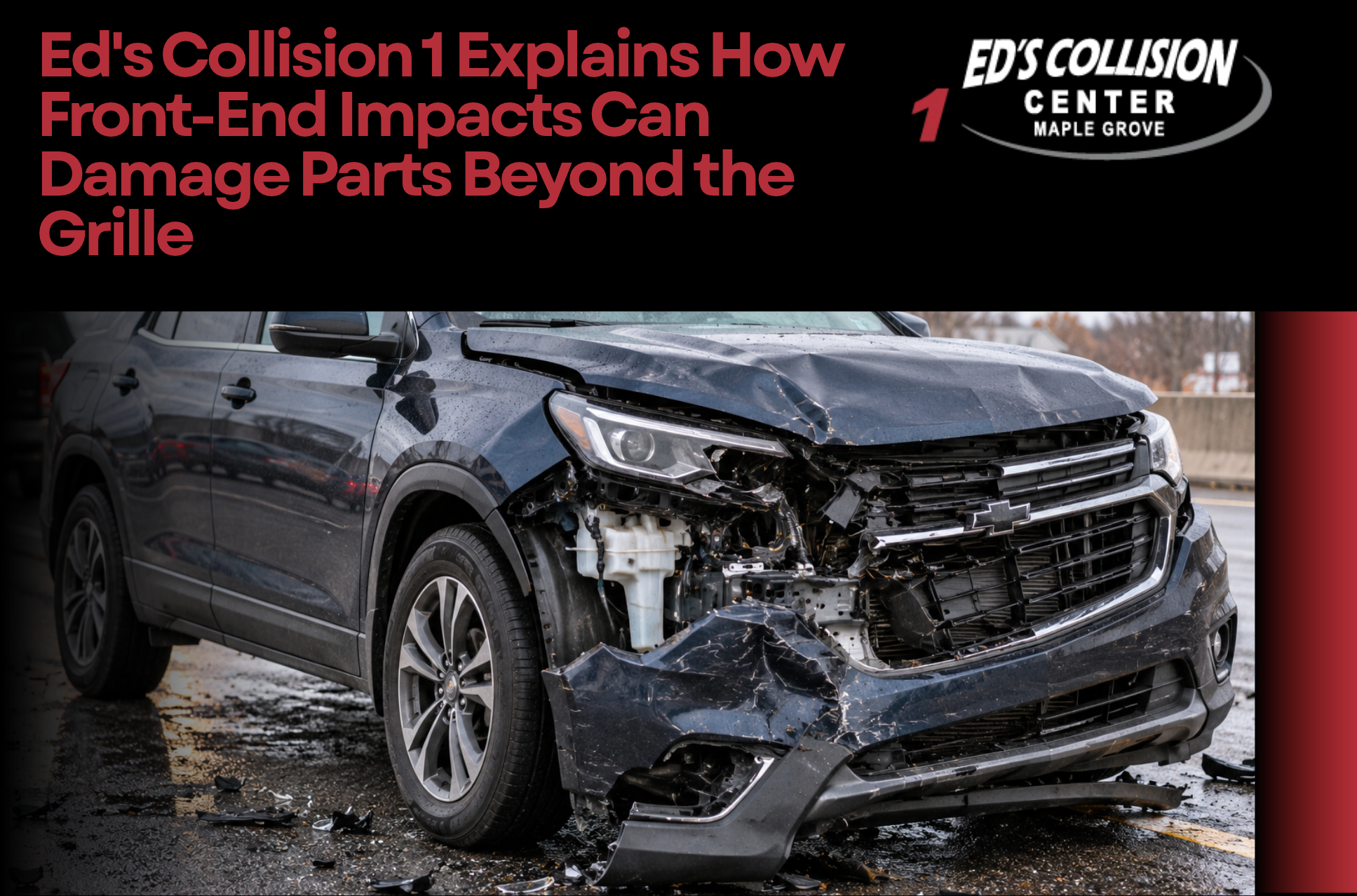
A vehicle's front section contains several layers of components designed for different purposes. Exterior panels provide the visible body surface, while reinforcement structures, mounting brackets, and energy-absorbing materials may be positioned beneath them. Cooling equipment and electronic sensors can also be located near the impact area, depending on the vehicle's design.
One indication of collision damage is a change in exterior panel alignment. Uneven gaps between the hood and fenders, displaced bumper components, or difficulty opening and closing the hood may suggest that surrounding mounting areas have been affected.
These conditions do not necessarily indicate structural damage. A damaged bracket can alter panel alignment without changing the vehicle's underlying structural dimensions. Distinguishing between exterior attachment damage and more extensive deformation is important when determining the repair scope.
Ed's Collision 1 provides auto body repair services for vehicles with accident-related exterior damage. Repair planning may involve restoring damaged panels, replacing affected components, or correcting alignment according to the documented damage and applicable vehicle requirements.
Components behind the bumper and grille may require closer examination following an impact. Depending on the vehicle, these areas can include reinforcement structures, energy absorbers, and attachment points that serve specific functions during a collision.
A relatively minor impact may damage an exterior bumper cover without significantly affecting underlying components. A more substantial collision may deform supporting structures that are not visible until damaged exterior parts are removed.
Certain structural components have manufacturer-specific restrictions concerning straightening, heating, or reuse after damage. These requirements help determine whether a component can be repaired or must be replaced.
Mechanical equipment is another consideration. Radiators, condensers, cooling fans, fluid lines, and related mounting components may be positioned near the front of a vehicle. Damage to these parts can occur even when the exterior impact appears concentrated around the grille or bumper.
A damaged cooling component may not produce an immediate fluid leak. Some conditions become apparent only during closer inspection or subsequent vehicle operation. Warning signs such as overheating, fluid leakage, or abnormal mechanical operation warrant evaluation before continued driving.
Electronic driver-assistance equipment adds another layer to front-end collision assessments. Modern vehicles may contain radar sensors, cameras, and related components near the front bumper, grille, or windshield.
An impact can affect these systems through direct component damage or changes in sensor mounting positions. Depending on the vehicle and repair operations, diagnostic scanning, inspection, or calibration may be required.
The absence of a dashboard warning does not establish that every affected electronic system is operating within its intended specifications. Vehicle manufacturer procedures identify the necessary checks for particular components and repair conditions.
Ed's Collision 1 also provides collision repair services for accident-related damage involving exterior panels and underlying vehicle components. Repair estimates may require updates when disassembly reveals damaged reinforcement parts, mounting points, cooling equipment, or other concealed components.
These additional findings can affect replacement part requirements, repair operations, and the anticipated completion schedule. Supplemental documentation helps identify the work necessary beyond the preliminary assessment.
Minnesota's winter conditions provide an additional consideration for vehicles with damaged front-end components. Moisture, snow, and road deicing materials may reach exposed metal or areas where protective coatings have been disturbed. Applicable refinishing and corrosion protection procedures may be necessary when these surfaces are repaired.
Exterior lighting also deserves attention following frontal impacts. Damaged headlamp assemblies, mounting brackets, or alignment points can affect the positioning and operation of vehicle lights. Appropriate inspection and adjustment depend on the damage and vehicle design.
Following repairs, verification may include checking hood operation, panel alignment, lighting, cooling components, and electronic systems affected by the collision. Structural measurements or additional functional testing may also be required for certain repairs.
Not every front-end collision results in extensive mechanical or structural damage. The necessary repairs depend on the impact, the vehicle's construction, and the components identified during assessment.
Industry training organization I-CAR provides educational information on collision repair planning and modern vehicle technologies, including the importance of using current vehicle-specific repair information.
Additional information about Ed's Collision 1 and its available services is provided through the Maple Grove location page. The facility serves drivers in Maple Grove and surrounding Twin Cities communities with collision-related vehicle repair needs.
Ed's Collision 1's November consumer guidance emphasizes that visible grille or bumper damage may represent only part of a frontal collision's effects. Understanding the potential involvement of structural attachments, mechanical equipment, and electronic systems can help vehicle owners recognize why repair assessments sometimes extend beyond the vehicle's exterior appearance.
About Ed's Collision 1
Ed's Collision 1 is an auto body and collision repair facility located at 10758 County Rd 81, Maple Grove, MN 55369. The facility provides auto body repair, collision repair, paint refinishing, and related vehicle restoration services for drivers in Maple Grove and surrounding Twin Cities communities. As part of the Collision Center 1 network, the location addresses accident-related damage through vehicle-specific assessments and applicable manufacturer repair procedures.
###
For more information about Ed’s Collision 1, contact the company here:
Ed’s Collision 1
Jerald Stiele
(763) 425-0077
EdsCollisionCC@gmail.com
10758 County Rd 81, Maple Grove, MN 55369