Commonwealth Fusion Systems Builds on Learnings from SPARC to Publish Five Peer-Reviewed Papers Validating the Physics of the ARC Fusion Power Plant
PR Newswire
DEVENS, Mass., June 4, 2026
- The set of five peer-reviewed papers, authored by a global team of scientists in a special issue of Journal of Plasma Physics, published by Cambridge University Press, offer a scientifically rigorous examination of CFS' commercial tokamak power plant using state-of-the-art tools and lessons learned from the design and construction of CFS' SPARC fusion demonstration machine.
- The analysis provides confidence that the ARC power plant will be able to continuously deliver 400 megawatts (MW) of net electricity to the grid, highlighting areas of physics that are well proven and areas where additional data from SPARC will reduce uncertainty.
- The ARC Physics Basis papers follow the success of the original seven papers that CFS published on SPARC in 2020 and significantly improve upon the original ARC papers that predate CFS.
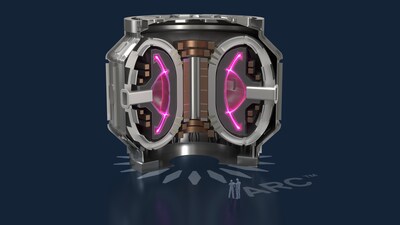
DEVENS, Mass., June 4, 2026 /PRNewswire/ -- Commonwealth Fusion Systems (CFS), the global leader in fusion energy, today announced the publishing of five peer-reviewed physics basis papers on the company's ARC fusion power plant in a special edition of Journal of Plasma Physics, published by Cambridge University Press. The papers, written collaboratively by a team of world-class physicists, offer an in-depth examination of the scientific foundations of the ARC power plant and confirm the key physics that'll enable ARC to continuously deliver 400 megawatts (MW) of net electricity to the grid.
"In publishing these papers, CFS and our partners have shown that if we build the ARC tokamak and power plant as we intend, it'll work," said Alex Creely, Chief Engineer for ARC Conceptual Design at CFS and author of the guest editorial in the journal's special Issue. "We have demonstrated that the design of the ARC fusion power plant has a solid foundation in proven physics; we point out where we will still learn from SPARC; and we show how there is a robust path to deliver 400 MW of clean, firm, baseload power to the grid."
The papers were co-authored by 58 scientists, the majority from universities, including the Massachusetts Institute of Technology (MIT), Columbia University, University of California San Diego, KTH Royal Institute of Technology, Chalmers University of Technology as well as the global research institute, the Max Planck Institute for Plasma Physics (IPP).
The following topics are covered in the most recent papers:
- Overview of the physics basis for the ARC fusion power plant
- Power and particle exhaust for the ARC fusion power plant
- ARC disruption physics and strategy
- Performance and transport in the ARC tokamak
- ARC physics basis — magnetohydrodynamics
The overview describes the overall attributes of the tokamak and summarizes the other four papers' key takeaways in areas like fusion power production and plasma stability. The accompanying papers look into specific physics topics of the ARC plant with details on the behavior of the plasma itself, including the strategy for handling plasma disruptions and how fusion heat will be exhausted through the plasma.
The ARC physics basis papers build on the original seven papers that CFS published on SPARC in 2020. The overview paper describing SPARC from that set is still Journal of Plasma Physics' most-read research paper.
The team used advanced computational tools to combine decades of empirical research conducted on tokamaks worldwide in a physics simulation framework with engineering and commercial priorities. From these simulations, the team determined that the ARC plant will be able to produce about 1.1 gigawatt (GW) of fusion power that will then be converted into 400 MW of continuous net electricity.
"The papers validate and de-risk the approach to commercial fusion we've taken, and increase our confidence that there is a scientifically robust path to putting electricity on the grid in the early 2030s," said Bob Mumgaard, CEO and Co-founder of Commonwealth Fusion Systems. "Peer-reviewed research sets the standard for where and how to invest valuable resources in fusion. The ARC physics basis papers represent a step forward in the depth and breadth of tokamak power plant analysis. They take the challenges seriously, identify where the risks are, and show us how to use SPARC to finalize the ARC plant's design."
The work was supported by a growing set of public-private partnerships and programs, including the U.S. Department of Energy's Milestone-Based Fusion Development Program. Publishing these peer-reviewed papers demonstrates how the ARC power plant agrees with known physics and how CFS and its partners have developed the tools to further refine its design.
"We're excited to start running SPARC so we can put the finishing touches on the ARC design, taking advantage of SPARC's operational similarity to the power plant," said Brandon Sorbom, Co-founder and Chief Science Officer of CFS.
About Commonwealth Fusion Systems
Commonwealth Fusion Systems is the world's largest and leading private fusion company. The company's marquee fusion project, SPARC, will generate net energy, paving the way for limitless carbon-free energy. The company has raised almost $3 billion in capital since it was founded in 2018. SPARC® and ARC™ are trademarks of Commonwealth Fusion Systems®.
About Cambridge University Press
Cambridge University Press is the academic and Bibles publisher of Cambridge University Press & Assessment. It publishes books and journals, serving customers in higher education through research, education products and services. It is part of the University of Cambridge, delivering trusted research and learning materials that spread knowledge, spark curiosity and aid understanding of the world we live in. cambridge.org/universitypress
Media contact: Christine Dunn, press@cfs.energy

 View original content to download multimedia:https://www.prnewswire.com/news-releases/commonwealth-fusion-systems-builds-on-learnings-from-sparc-to-publish-five-peer-reviewed-papers-validating-the-physics-of-the-arc-fusion-power-plant-302790590.html
SOURCE Commonwealth Fusion Systems