
Collision Center 1 Golden Valley is sharing consumer guidance explaining how structural measuring contributes to collision damage assessment and vehicle restoration following an accident. The November guidance focuses on identifying changes in vehicle dimensions, using manufacturer specifications during repair planning, and verifying affected structural areas after repairs are completed.
Modern vehicles are manufactured with specific structural dimensions that establish the intended positions of body sections and attachment points. A collision can change these measurements even when exterior damage appears limited to a bumper, fender, or door. Structural measuring helps repair professionals evaluate whether affected areas remain within applicable manufacturer specifications.
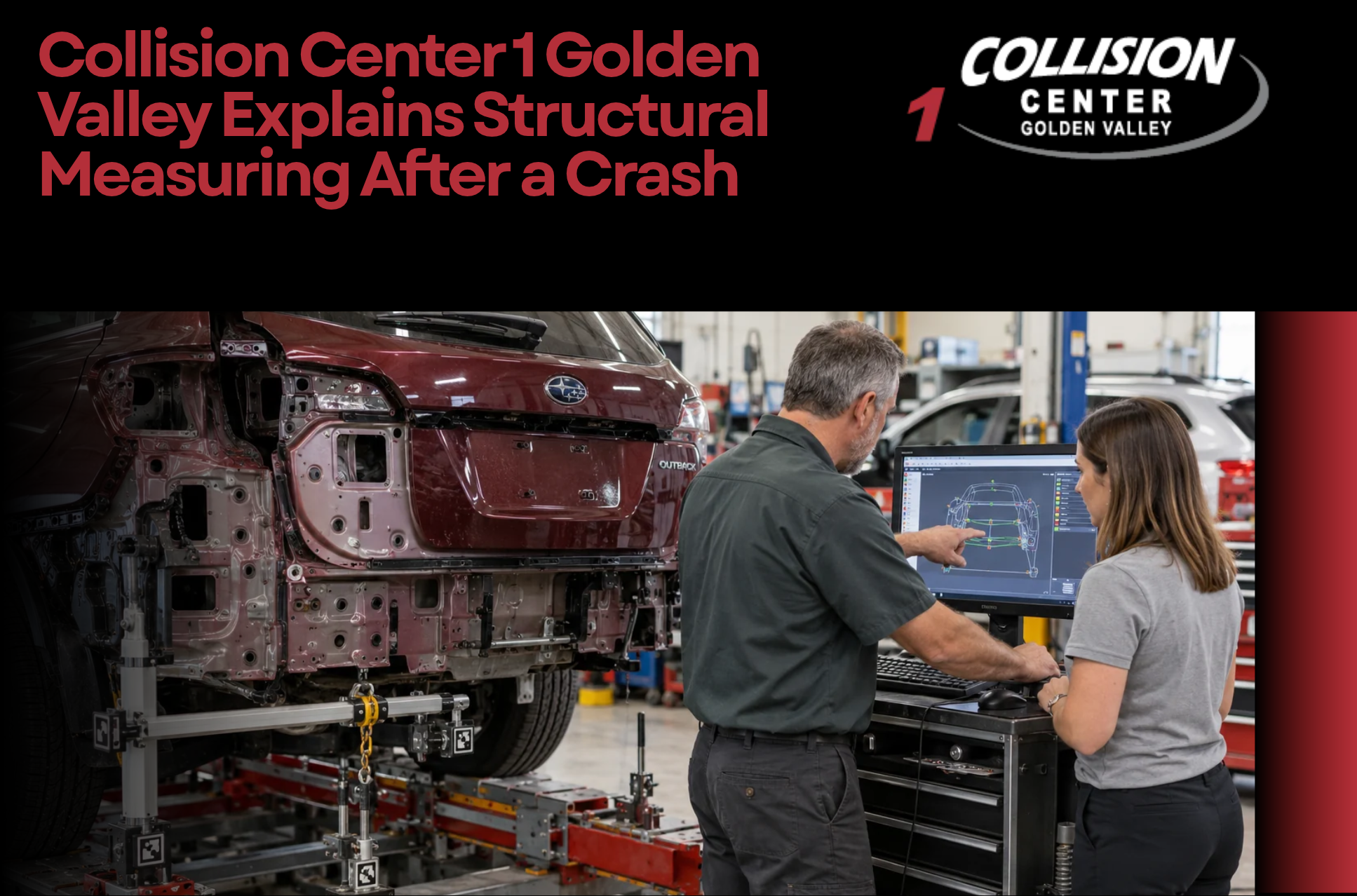
The guidance identifies three stages where structural measurements may be relevant: the initial damage assessment, structural repair planning, and post-repair verification. These stages help explain how dimensional information contributes to evaluating collision-related damage that may not be visible during an exterior inspection.
During the initial assessment, technicians examine the location and extent of collision damage to determine whether structural measurements are necessary. Depending on the vehicle and impact, measuring equipment may be used to compare selected reference points with manufacturer dimensional data. Differences between measured positions and specified dimensions can indicate areas requiring further investigation.
For example, a front-end collision may affect structural mounting points or the positioning of adjacent body sections. A side impact may change the dimensions of a door opening, while a rear-end collision can affect the alignment of structural areas surrounding the cargo compartment. These conditions may require measurement even when the exterior panels can be visually repositioned.
Collision Center 1 Golden Valley provides collision repair services for vehicles affected by accident-related body and structural damage. Structural assessment may form part of the repair process when the location and severity of the impact indicate that underlying vehicle dimensions could be affected.
Structural measuring differs from evaluating exterior panel gaps alone. Body panels may appear aligned while concealed structural reference points remain outside specified dimensions. Conversely, uneven exterior gaps do not automatically establish that structural damage is present, because hinges, mounting points, and other components may also influence panel positioning.
The second stage involves using measurement findings to develop an appropriate repair plan. When a collision affects structural dimensions, technicians must determine which repair methods are permitted for the specific vehicle. Manufacturer instructions may establish repair limitations, measurement requirements, approved joining methods, or conditions requiring component replacement.
Vehicle construction plays an important role in these decisions. Modern automobiles may incorporate different grades of high-strength steel, aluminum, and other materials within their body structures. Certain materials and components have restrictions involving straightening, heating, sectioning, or replacement.
Structural measuring can help identify the location and extent of dimensional changes, but measurements alone do not determine whether a component can be repaired. The appropriate procedure depends on the damage, the material involved, and applicable manufacturer instructions. Repair planning must consider these factors together.
Measurement findings may also affect the scope of an initial repair estimate. Some structural conditions become apparent only after damaged exterior components are removed or additional inspections are completed. When new damage is identified, supplemental repair documentation may be necessary to explain changes to the repair plan.
Collision Center 1 Golden Valley also provides auto body repair services involving exterior restoration and related collision damage. Body panel repairs and refinishing may need to be coordinated with structural operations when underlying dimensions affect the fit of surrounding components.
The third stage involves verifying affected structural dimensions after repairs. Depending on the work performed, technicians may compare selected reference points with applicable manufacturer specifications to determine whether the required dimensional corrections have been completed. These measurements provide documented information about the areas evaluated.
Post-repair measurements are not a substitute for every other required inspection. A vehicle may also need checks involving suspension geometry, mechanical components, occupant protection systems, or electronic driver-assistance equipment. The necessary procedures depend on the original damage and the repairs performed.
Structural measurements also have limitations that vehicle owners should understand. A result showing that selected reference points meet specified dimensions does not independently establish that every structural component is undamaged. It also does not guarantee how a vehicle will perform in a future collision.
For Golden Valley drivers, the November guidance explains why structural measuring may be relevant even when a damaged vehicle remains drivable. The ability to operate a vehicle after an accident does not confirm that its underlying structure is unaffected. Appropriate inspection is necessary when the damage or impact conditions indicate potential structural concerns.
Not every collision requires extensive structural measurement or correction. Minor cosmetic damage may be limited to exterior components, while more substantial impacts may warrant additional dimensional evaluation. The required work depends on the vehicle's construction, the damage identified, and manufacturer procedures.
Collision Center 1 provides information about its local repair facility through the Golden Valley location page. Located at 900 Florida Ave S, the facility serves vehicle owners in Golden Valley and surrounding Twin Cities communities.
The November consumer guidance emphasizes that structural measuring is one part of a broader collision repair assessment. Comparing affected vehicle dimensions with manufacturer specifications can support damage identification, repair planning, and verification of completed structural work.
About Collision Center 1 Golden Valley
Collision Center 1 Golden Valley is an auto body and collision repair facility located at 900 Florida Ave S, Golden Valley, MN 55426. The location provides collision repair, auto body repair, paint refinishing, and related vehicle restoration services for drivers throughout Golden Valley and surrounding Twin Cities communities. As part of Collision Center 1, the facility addresses accident-related damage using vehicle-specific assessments and applicable manufacturer repair procedures.
###
For more information about Collision Center 1 Golden Valley, contact the company here:
Collision Center 1 Golden Valley
Jerald Stiele
(763) 541-9727
layres@collisioncenter1.com
900 Florida Ave S, Golden Valley, MN 55426