LOS ANGELES — The U.S. septic industry serves roughly 21 million households, with about one in five American homes relying on septic systems rather than municipal sewer connections. Despite the size of the market, most septic service operations still run on a reactive maintenance model that costs companies significant time, fuel, and lost revenue.
The cycle is familiar across the industry. A homeowner installs a septic system and receives a recommendation to pump it every three to five years. The reminder is forgotten. A service company sends a postcard that often goes ignored. Eventually the system backs up, frequently at the worst possible time, triggering an urgent call for emergency service. While emergency jobs command premium pricing, they also disrupt schedules, force trucks off planned routes, and create operational inefficiencies around work that could have been predicted and scheduled.
Multiply that scenario across hundreds or thousands of customers, and the cost of operating reactively becomes substantial. Service providers spend significant resources responding to emergencies that routine maintenance could have prevented.
SepticMind, a Los Angeles-based technology company, has introduced an artificial intelligence platform designed to shift the industry from reactive service to predictive operations.
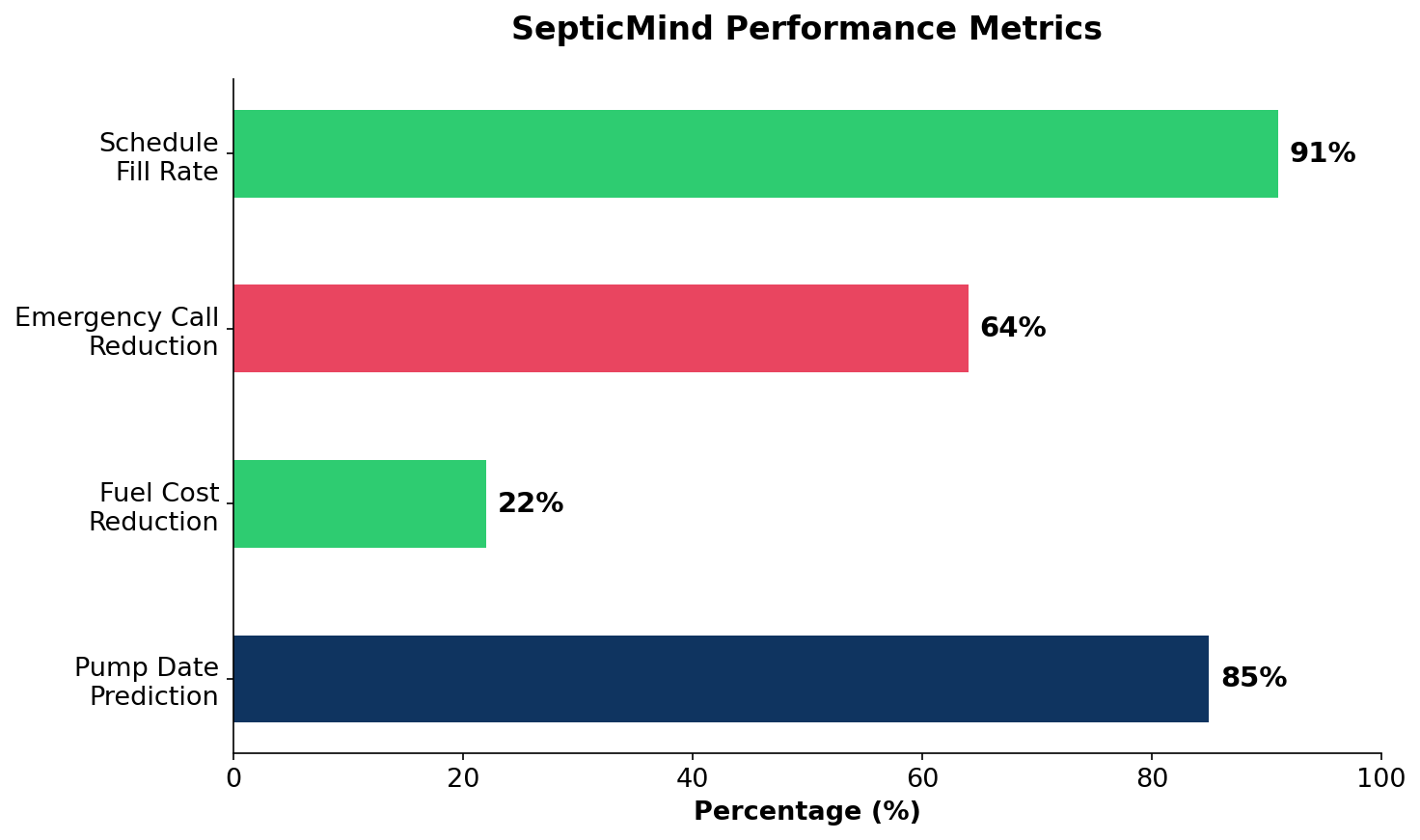
The SepticMind platform uses a predictive engine that analyzes tank capacity, household size, water usage patterns, soil percolation characteristics, system age, historical service frequency, and seasonal demand trends. The system forecasts when individual septic tanks are likely to require pumping, with reported accuracy rates exceeding 85 percent.
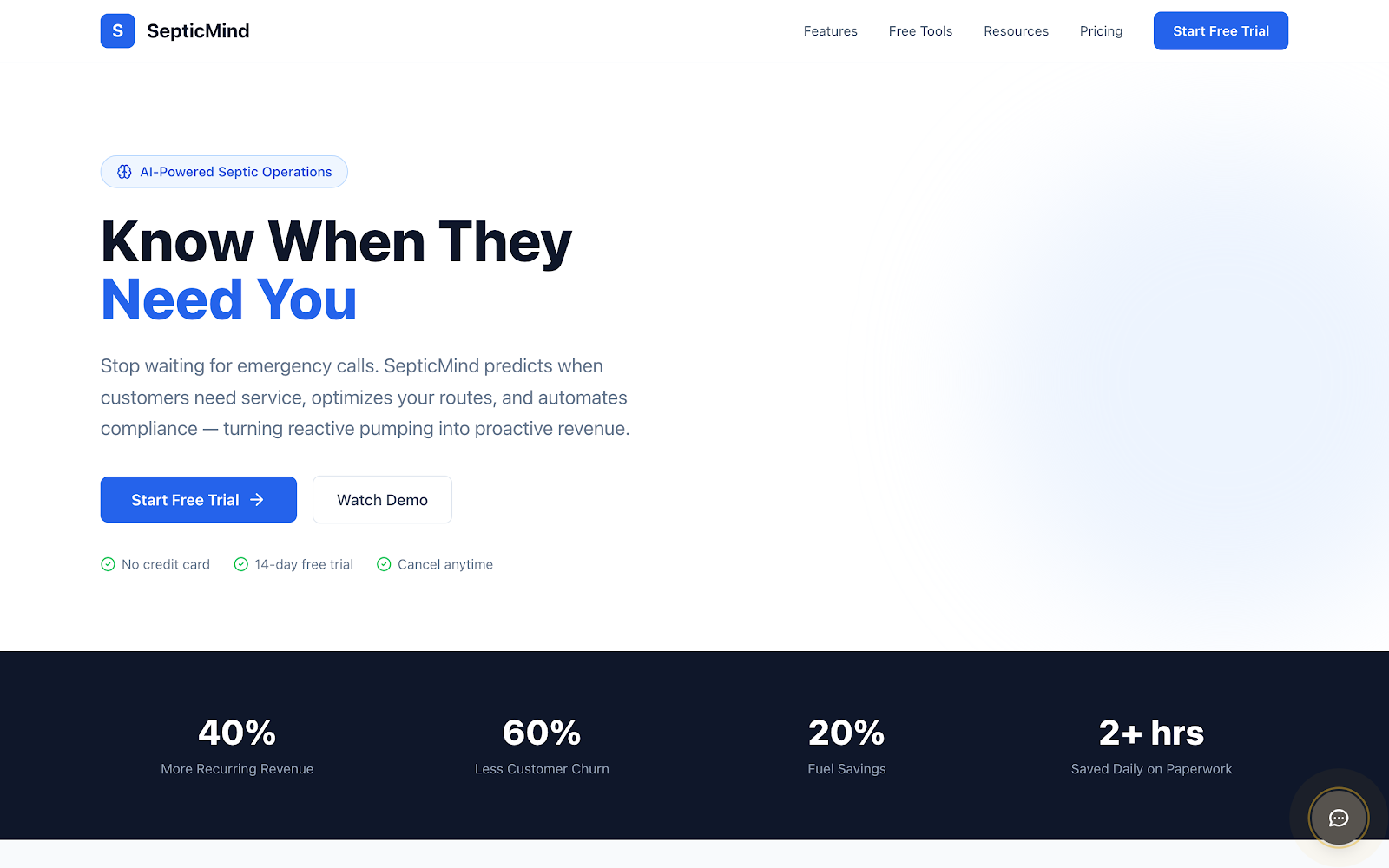
Instead of waiting for customers to call after a failure, service companies using the platform can proactively notify homeowners when their system is approaching its recommended service window. Because the outreach is based on system data rather than generic reminders, it arrives as a timely maintenance notice rather than a marketing message. The result is a shift toward scheduled maintenance calls instead of last-minute emergency dispatches.
The platform also includes route optimization software designed to reduce operating costs. Traditional routing often relies on dispatchers manually arranging daily job orders. SepticMind’s routing engine evaluates drive time, traffic patterns, truck capacity, tank levels, and job duration to build optimized daily routes. Companies using the system report fuel savings of more than 20 percent while increasing the number of jobs completed per day.
Fleet tracking tools provide real-time visibility into pump truck tank levels, allowing dispatchers to see which trucks can complete additional jobs and which must offload first. The feature is designed to prevent situations where a truck is dispatched to a job without sufficient tank capacity to finish the work.
“The best septic companies aren’t the ones with the most trucks,” said founder Mike Rowan. “They’re the ones who know which houses need service next week and can fill their routes with that work before the emergency calls start. SepticMind gives every company that intelligence, whether they operate two trucks or two hundred.”
SepticMind also automates regulatory documentation. Inspection reports, service records, disposal documentation, and regulatory filings are generated from operational data captured during jobs. When health departments or regulators request records, companies can produce them immediately rather than manually searching through paper files.
The platform’s analytics dashboard provides insight into operational metrics including revenue per route, cost per job, customer lifetime value, seasonal demand patterns, service frequency by neighborhood, and technician productivity.
In addition to the core platform, SepticMind maintains a tank reference library at septicmind.com/tanks that includes specifications for major septic tank types such as concrete, fiberglass, and polyethylene systems. The company also offers free industry tools at septicmind.com/tools, including pump interval calculators, route efficiency estimators, and tank sizing guides.
SepticMind serves septic pumping companies, portable restroom service providers, grease trap maintenance operators, septic inspection firms, and wastewater service businesses across the United States.
More information is available at septicmind.com.
About SepticMind
SepticMind is an AI-powered operations platform for septic pumping and wastewater service companies. The platform combines predictive maintenance forecasting, route optimization, fleet tracking, compliance automation, and business analytics to help service providers operate more efficiently, reduce fuel costs, and transition from reactive emergency service to proactive maintenance scheduling.